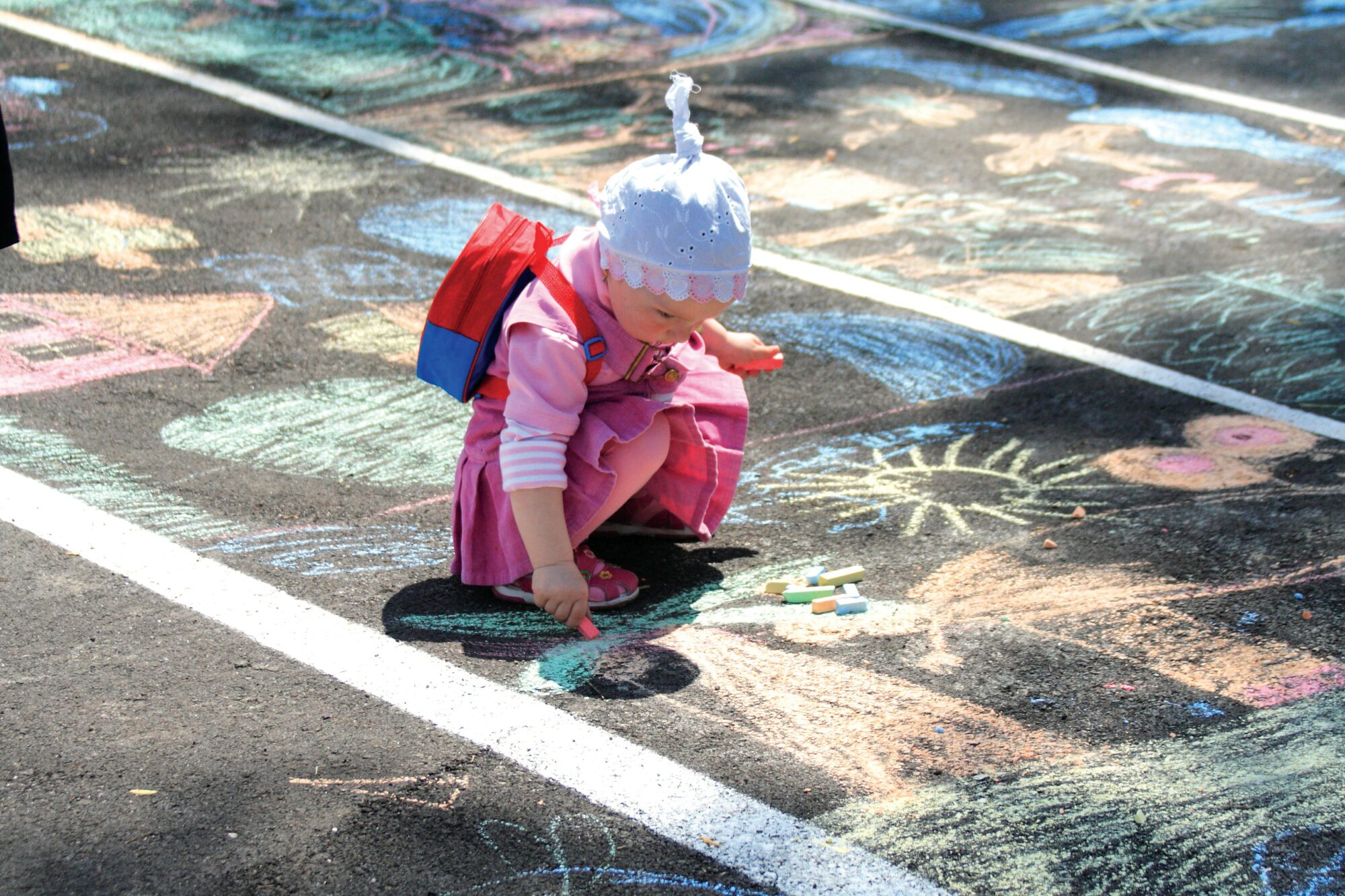
The classroom walls are a fantastic starting point, but what if we could take the foundational skill of reading and plant it firmly in the real world? Nature provides a dynamic, multi-sensory, and endlessly engaging classroom for young learners.
By moving phonics instruction outdoors, we can transform repetitive drills into adventurous games. This approach not only reinforces letter-sound relationships but also fosters a lifelong connection to the natural world. Here are some hands-on, nature-based phonics games designed for Kindergarten through Grade 3 learners.
Why Phonics Outdoors?
Learning outside supports children’s cognitive, social, and emotional development. Movement strengthens memory pathways, while natural materials support fine motor coordination and sensory processing (Shams & Seitz, 2008). Outdoor spaces also encourage collaboration, risk taking, and independence, which are important for literacy development.
Research shows that outdoor learning enhances motivation, attention, and engagement for young learners (Mann et al., 2022). When children interact with natural materials, they experience learning that is more hands-on, embodied, and meaningful (Kiewra & Veselack, 2016). Phonics instruction becomes more memorable when it involves movement, tactile exploration, and real-world connections.
These practices also reflect the First Peoples Principles of Learning, which emphasize that learning is experiential, holistic, and connected to the land (FNESC, 2025). When children build letters with sticks or listen for sounds in nature, they are learning in relationship with place and community.
Nature-Based Phonics Games for Every Level
For Kindergarten & Grade 1: Foundational Sounds
1. The Sound Scavenger Hunt
- Prep: Create a list of simple sounds (e.g., /b/, /s/, /m/, /t/). You can use pictures for non-readers.
- Play: “Today, we’re hunting for things that start with the /b/ sound! Let’s find something brown, a branch, or a bud!” Children work individually or in teams to find natural objects that match the beginning sounds.
- Skill: Initial phoneme awareness.
2. Nature’s Alphabet Museum
- Prep: Introduce or review a target letter and its sound.
- Play: Challenge students to create the uppercase and lowercase forms of the letter using materials they find. A curved stick and a pebble can make a ‘Q’. A line of pine needles can make an ‘I’.
- Skill: Letter recognition and formation.
3. Syllable Stomp & Clap
- Prep: Gather a collection of natural objects with 1-3 syllable names (e.g., rock [1], leaf [1], pine-cone [2], dandelion [4]).
- Play: Hold up an object. As a group, stomp (for the first syllable) and clap (for subsequent syllables) while saying the word: “DAN-del-i-on!” This combines rhythm, movement, and phonological awareness.
- Skill: Syllable segmentation.
For Grade 1 & 2: Blending and Segmenting
4. Magic Bridge Blending
- Prep: Find a “bridge” such as a fallen log, a line of stones, or even a chalk-drawn bridge on the pavement.
- Play: The teacher stands on one side and says a word in segmented sounds, like “/c/…/a/…/t/.” The child walks across the bridge, blending the sounds as they go, and says the whole word, “cat!”, by the time they reach the other side.
- Skill: Phoneme blending.
5. Word Family Stone Stacking
- Prep: Choose a word family (e.g., -at, -op, -ick).
- Play: Write the rime (e.g., at) on a large, flat stone with chalk. Then, have children find smaller stones. On each small stone, they write an onset (c, b, r, m, etc.). They stack the onset stone on top of the rime stone to build a tower and read the new word aloud!
- Skill: Onset-rime blending, word families.
For Grade 2 & 3: Spelling Patterns & Sight Words
6. Digraph & Blend Treasure Hunt
- Prep: Introduce a target digraph or blend (e.g., sh, ch, bl, tr).
- Play: In pairs, children hunt for natural items that contain that sound. For sh, they might point to a shadow, a shell, or a bush. They can draw or list their “treasures” on a clipboard.
- Skill: Consonant digraph and blend recognition.
7. Sight Word Stick Spell
- Prep: Select a few high-frequency sight words (e.g., they, what, where).
- Play: Call out a sight word. Children must find sticks and arrange them on the ground to spell the word correctly. This tactile process helps cement the irregular spelling pattern into memory.
- Skill: Sight word recognition and spelling.
Tips for a Smooth Outdoor Lesson
- Set Clear Boundaries: Use natural markers like “stay within the line of trees” or “do not pass the big rock.”
- Embrace the “Messy”: Learning might be louder and more chaotic than indoors, and that’s okay! The engagement is worth it.
- Be Flexible: If a child finds a fascinating slug instead of the letter ‘L’, use it as a teachable moment! “Wow, that slug starts with a great blend, /sl/!”
Growing Readers and Nature Lovers
By taking phonics outside, we do more than just teach reading. We show children that learning isn’t confined to a desk. We help them see patterns in nature and in language, fostering curiosity and a sense of wonder that applies to both books and the world around them.
So, grab your clipboard, gather your young explorers, and watch as letters and sounds come to life under the open sky!
References
First Nations Education Steering Committee (FNESC). (2025). About. https://www.fnesc.ca/
Kiewra, C., & Veselack, E. (2016). Playing with nature: Supporting preschoolers’ creativity in natural outdoor classrooms. International Journal of Early Childhood Environmental Education, 4(1), 70–95. https://files.eric.ed.gov/fulltext/EJ1120194.pdf
Mann, J., Gray, T., Truong, S., Brymer, E., Passy, R., Ho, S., Sahlberg, P., Ward, K., Bentsen, P., Curry, C., & Cowper, R. (2022). Getting Out of the Classroom and Into Nature: A Systematic Review of Nature-Specific Outdoor Learning on School Children’s Learning and Development. Frontiers in Public Health, 10, 877058. https://doi.org/10.3389/fpubh.2022.877058
Shams, L., & Seitz, A. R. (2008). Benefits of multisensory learning. Trends in Cognitive Sciences, 12(11), 411–417. https://doi.org/10.1016/j.tics.2008.07.006