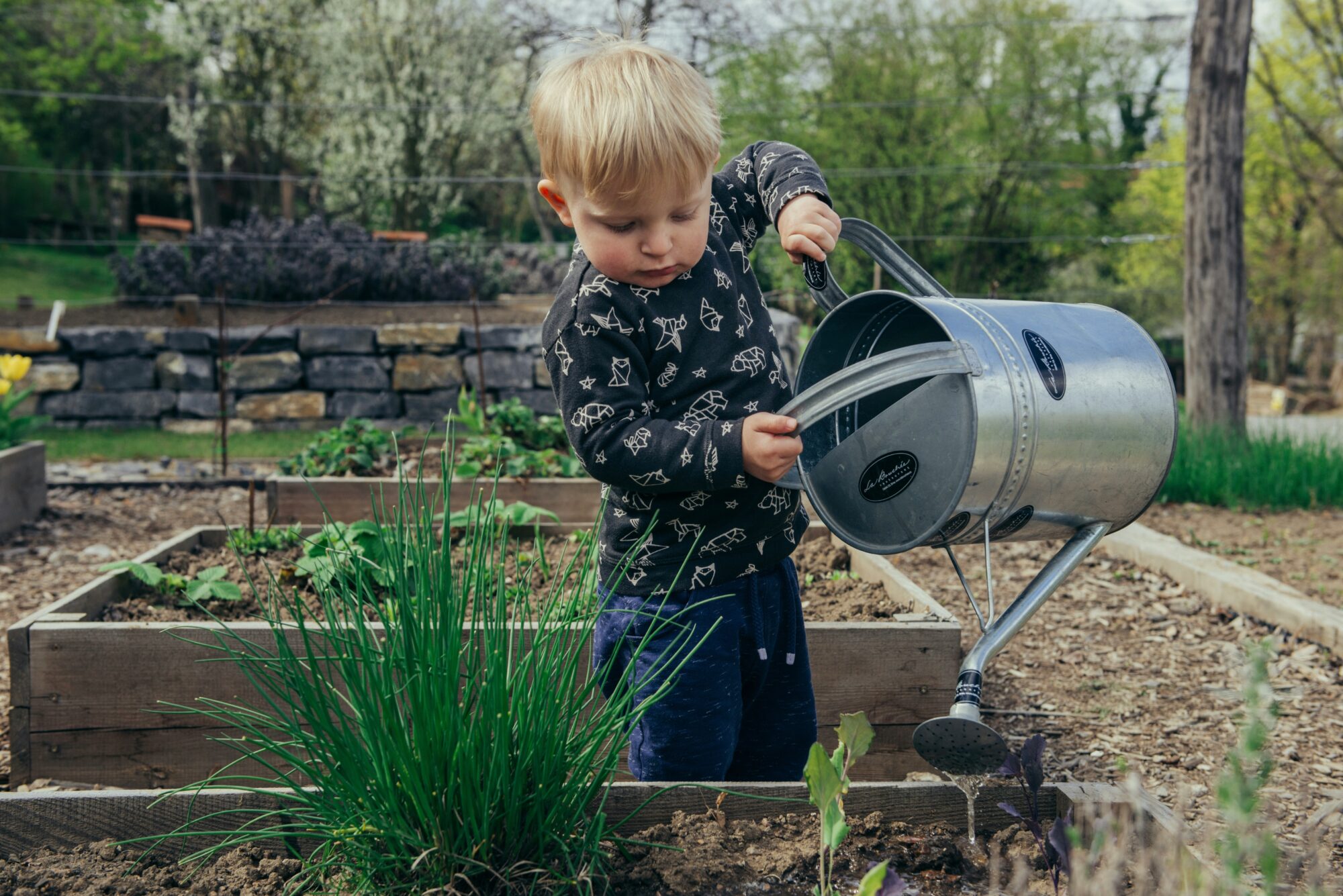
Outdoor classrooms do not need to be elaborate or expensive. With a few thoughtful elements, schoolyards can become vibrant spaces where children explore, imagine, collaborate, and learn with joy. Gardens, mud kitchens, and simple loose-parts areas provide rich opportunities for children to practice communication, problem solving, and self-regulation while connecting with the land.
Below are essential components that help transform any outdoor area into a meaningful learning space for K–3 students.
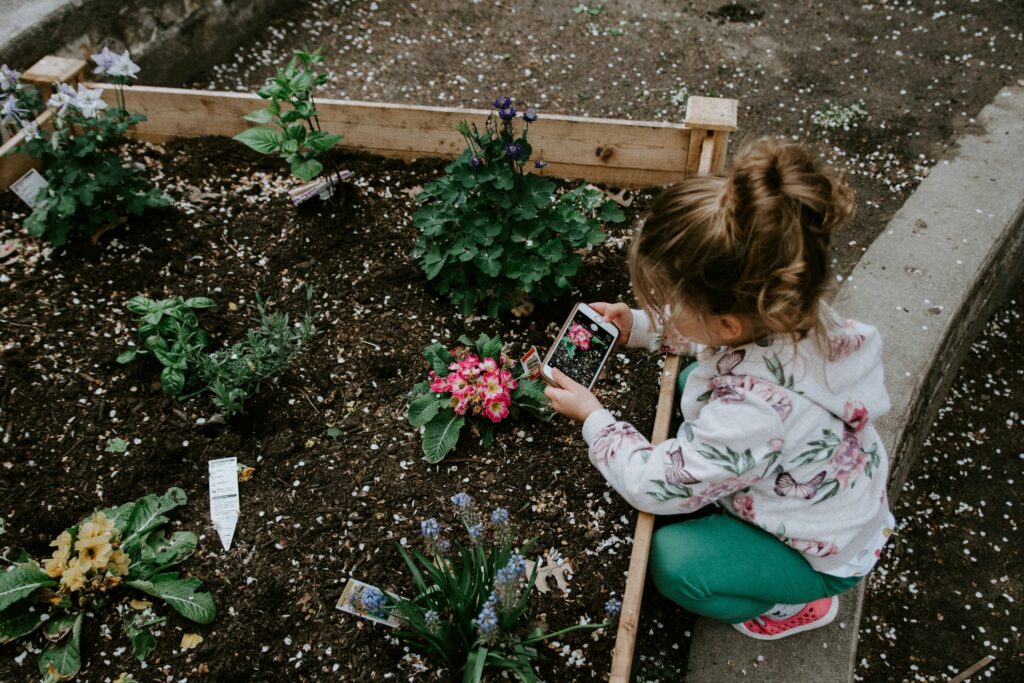
Essential #1: The Child-Sized Garden (No Green Thumb Required!)
A school garden is more than a place to plant seeds. It is a living classroom where children learn to observe patterns, take responsibility, and care for living things. Research shows that gardening increases student engagement, strengthens science understanding, and improves overall well-being (Blair, 2009). When students nurture plants, they develop empathy, patience, and curiosity.
How to start small:
- Plant herbs or fast-growing vegetables in raised beds or containers.
- Invite students to decide what to grow and create simple observation journals.
- Use the space for cross-curricular learning: counting seeds, measuring plant growth, or descriptive writing.
Why it works:
Gardens offer multisensory experiences that support emotional regulation and hands-on learning (Mann et al., 2022). Children naturally slow down and pay attention.
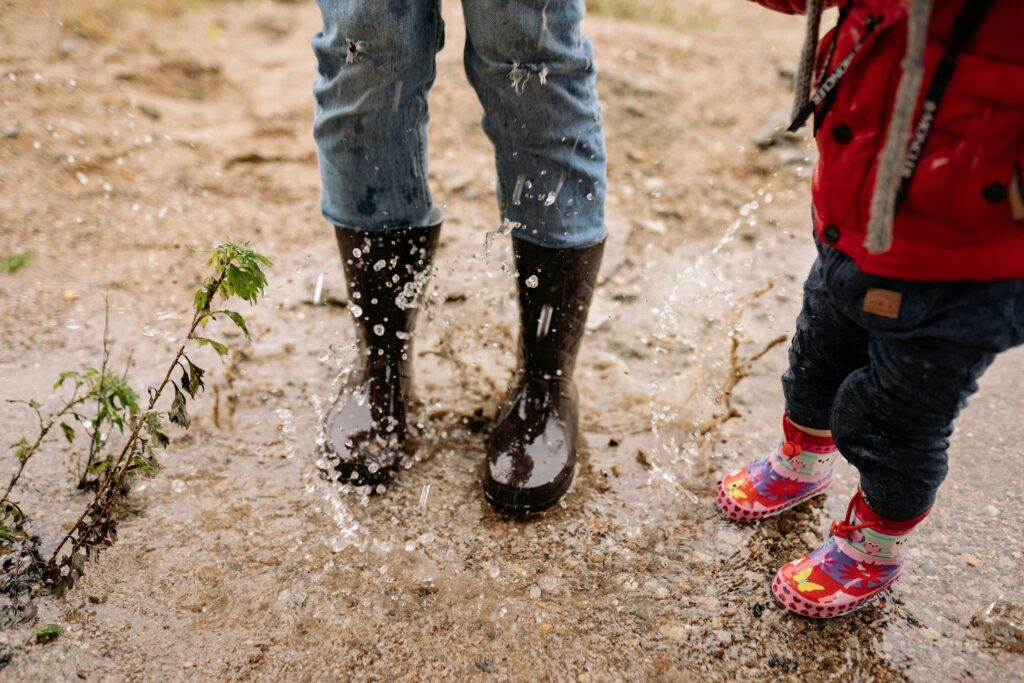
Essential #2: The Magical Mud Kitchen
Mud kitchens are often the heart of an outdoor classroom. They invite imaginative play, cooperation, and experimentation. Children mix soil, water, leaves, and natural materials to create soups, potions, and pretend meals. Although it may look like simple play, this sensory-rich activity supports early literacy, oral language, and problem solving.
Sensory and loose-materials play has been shown to support creative thinking, motor development, and resilience (Kiewra & Veselack, 2016). Mud kitchens allow children to think flexibly, negotiate roles, test ideas, and learn through trial and error.
Ideas for building a mud kitchen:
- Use old shelves, wooden pallets, or tables.
- Add metal bowls, scoops, strainers, and pots from thrift stores.
- Keep a “menu board” or chalkboard nearby for playful writing.
Why it works:
Mud kitchens support pretend play, which is linked to language development and higher-order thinking (Temple, 2018).
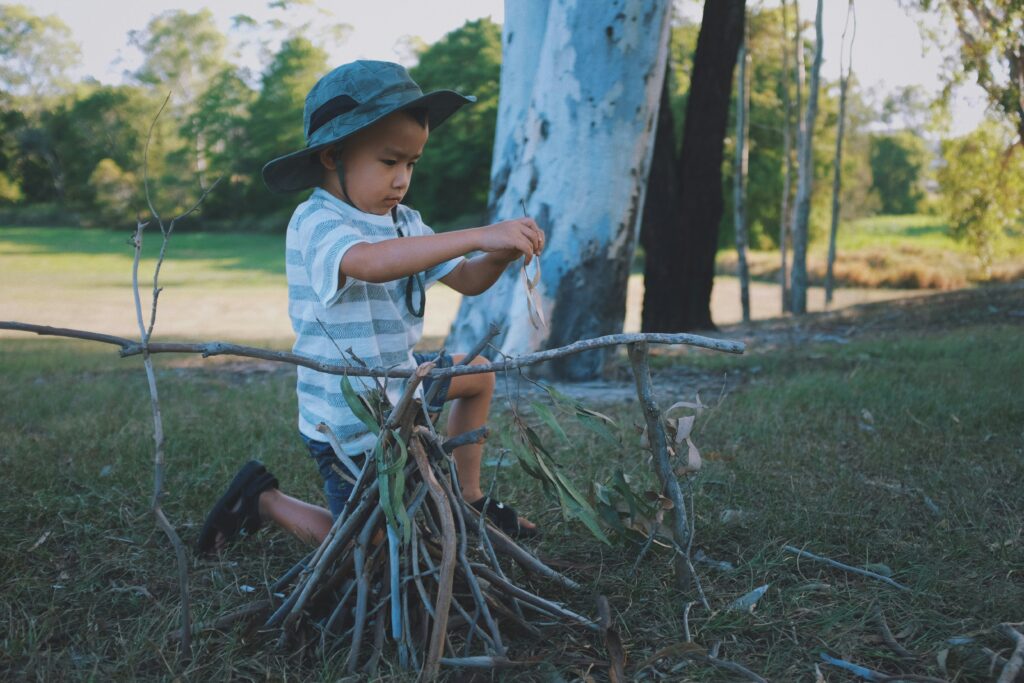
Essential #3: Inviting Play Spaces with Loose Parts
Loose parts are materials that children can move, stack, sort, connect, and transform. Outdoors, loose parts might include sticks, pinecones, rocks, log slices, ropes, buckets, tires, or fabric.
When children work with loose parts, they create their own worlds, build collaboratively, and use their bodies to problem-solve. Loose-parts play supports divergent thinking and helps children develop persistence and independence (Cankaya et al., 2024).
How to introduce loose parts:
- Start with a few items and expand over time.
- Model how to move items safely.
- Set simple expectations: “Build safely” and “Work together.”
Why it works:
Loose parts allow open-ended play, giving children power and ownership over their learning. This aligns with the First Peoples Principles of Learning, which emphasize exploration, agency, and learning through experience (FNESC, 2025).
Essential #4: Creating Spaces That Truly Invite Play
An outdoor classroom does not need to be complicated. Start by creating zones:
- a quiet space with stumps or benches
- a building space with logs and loose parts
- a nature exploration space with a garden or planters
- a creative space like an art table or mud kitchen
Research shows that outdoor environments designed with intentional “play invitations” increase children’s engagement, social cooperation, and confidence (Bento & Dias, 2017).
Simple additions that make a big difference:
- Clipboards and watercolour trays
- Buckets for collecting natural treasures
- Tree cookies for counting, storytelling, or sorting
- Chalkboards or outdoor easels
- Shade cloths or tarps for shelter and cozy nooks
When children have choice and autonomy in these spaces, they become more confident and collaborative learners.
Bringing It All Together
The most effective outdoor classrooms are not fancy. They are responsive, flexible, and centred on children’s natural instincts to explore and play. Gardens teach care. Mud kitchens spark imagination. Loose parts inspire creativity. Together, they create a learning environment that honours the whole child.
Outdoor classrooms also reflect a deeper truth: learning happens through relationships with land, with materials, and with one another. As teachers, creating these spaces is a gift to our students, giving them room to move, wonder, and grow.
References
Bento, G., & Dias, G. (2017). The importance of outdoor play for young children’s healthy development. Porto Biomedical Journal, 2(5), 157–160. https://doi.org/10.1016/j.pbj.2017.03.003
Blair, D. (2009). The Child in the Garden: An Evaluative Review of the Benefits of School Gardening. The Journal of Environmental Education, 40(2), 15–38. https://doi.org/10.3200/JOEE.40.2.15-38
Cankaya, O., Leach, J., & Akdemir, K. (2024). The Journey of Loose Parts across Educational Landscapes and History: The Role of Materials, Relationships, Space, and Time in Children’s Loose Parts Play. American Journal of Play, 16(2–3), 210–245.
First Nations Education Steering Committee (FNESC). (2025). About. https://www.fnesc.ca/
Kiewra, C., & Veselack, E. (2016). Playing with nature: Supporting preschoolers’ creativity in natural outdoor classrooms. International Journal of Early Childhood Environmental Education, 4(1), 70–95. https://files.eric.ed.gov/fulltext/EJ1120194.pdf
Mann, J., Gray, T., Truong, S., Brymer, E., Passy, R., Ho, S., Sahlberg, P., Ward, K., Bentsen, P., Curry, C., & Cowper, R. (2022). Getting Out of the Classroom and Into Nature: A Systematic Review of Nature-Specific Outdoor Learning on School Children’s Learning and Development. Frontiers in Public Health, 10, 877058. https://doi.org/10.3389/fpubh.2022.877058
Temple, C. A. (2018). All children read: teaching for literacy in today’s diverse classrooms (5th ed.). Pearson Education, Inc.