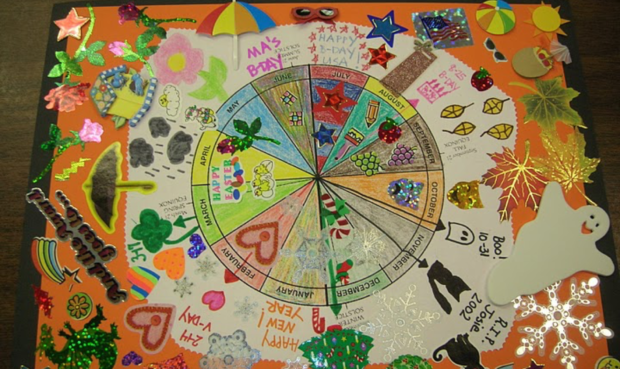
Seasonal rounds invite children to slow down, notice patterns, and connect deeply with the place where they live and learn. Instead of viewing the year as four fixed seasons, students learn to see change as a continuous cycle shaped by weather, plants, animals, and community life. This approach helps children understand that the environment is always teaching us something.
For primary learners, seasonal rounds strengthen curiosity, belonging, and observational skills. They support daily noticing, help students develop relationships with place, and offer rich opportunities for outdoor inquiry.
What Are Seasonal Rounds?
Seasonal rounds come from Indigenous knowledge systems that emphasize living in relationship with land and understanding its rhythms. The cycles vary depending on local ecosystems, food sources, climate, and cultural teachings.
Outdoor learning encourages students to notice subtle shifts in weather, light, plant life, and animal behaviour and to connect learning to lived experience in their own community (Kuo et al., 2019). This aligns with the First Peoples Principles of Learning, which highlight that learning is holistic, experiential, and tied to the land (FNESC, 2025).
Seasonal rounds fit naturally into place-based learning. Sobel (2013) describes place-based education as grounding curriculum in local environments and real experiences. This approach helps children build ecological literacy and empathy for the world around them.
Open School BC also offers a teacher-friendly introduction to seasonal rounds, outlining the importance of observing local changes through Indigenous perspectives and providing practical classroom examples (Open School BC, 2003).

Why Seasonal Rounds Matter for K–3
Research shows that outdoor learning increases children’s engagement, attention, and curiosity (Mann et al., 2022). When students revisit the same outdoor place regularly, they begin noticing:
- Which trees change colour first
- How puddles in the schoolyard appear and disappear
- When certain birds return
- New buds, mushrooms, or insects
- Changes in daylight and temperature
These observations strengthen scientific thinking, descriptive language, and environmental awareness.
Introducing Seasonal Rounds in a Primary Classroom
1. Weekly Noticing Walks
A weekly walk helps students track change over time. They record what has changed since last week.
2. Seasonal Journals
Students draw or write weekly observations. These become a visual timeline of environmental change.
3. Weather and Light Tracking
Track temperature, rainfall, cloud patterns, or daylight. This builds meaningful numeracy.
4. Identifying Local Plants and Animals
Use local guides or apps to learn names and characteristics.
Students begin to build relationships with place.
5. Creating a Class Seasonal Round Wheel
Display seasonal changes using drawings, labels, or photos.
Refresh it all year long.
6. Invite Family Knowledge
Encourage families to share how they notice and celebrate seasonal changes.
This builds community and inclusivity.
A Free Teacher Resource You Can Use Today
If you want to dive deeper, I have linked a free, fully developed Seasonal Rounds unit created by Open School BC. It includes:
- lesson plans
- student worksheets
- local Indigenous perspectives
- observation templates
- science and literacy connections
Download it here:
https://www.openschool.bc.ca/elementary/my_seasonal_round/pdf/SeasonalRound_unit.pdf
(Open School BC, 2013)
This resource is an excellent starting point for anyone teaching seasonal rounds in a primary classroom.
What Seasonal Rounds Teach Children
Seasonal rounds help children understand that:
- Change in nature is continuous
- Humans, animals, and plants adapt to cycles
- Local ecosystems are full of relationships
- The land deserves gratitude and care
Gruenewald (2003) explains that learning connected to land helps students understand their responsibilities within ecological and cultural systems.
Honouring the Land We Learn On
Seasonal rounds are not only science lessons. They are practices of awareness and relational learning. When children learn on the land with curiosity and intention, they develop gratitude and respect for the stories, knowledge, and history held in local places.
Teaching seasonal rounds in K–3 helps children feel grounded, connected, and capable as they learn through the environment that surrounds them every day.
References
First Nations Education Steering Committee (FNESC). (2025). About. https://www.fnesc.ca/
Gruenewald, D. A. (2003). Foundations of Place: A Multidisciplinary Framework for Place-Conscious Education. American Educational Research Journal, 40(3), 619–654. https://doi.org/10.3102/00028312040003619
Kuo, M., Barnes, M., & Jordan, C. (2019). Do Experiences With Nature Promote Learning? Converging Evidence of a Cause-and-Effect Relationship. Frontiers in Psychology, 10, 305. https://doi.org/10.3389/fpsyg.2019.00305
Mann, J., Gray, T., Truong, S., Brymer, E., Passy, R., Ho, S., Sahlberg, P., Ward, K., Bentsen, P., Curry, C., & Cowper, R. (2022). Getting Out of the Classroom and Into Nature: A Systematic Review of Nature-Specific Outdoor Learning on School Children’s Learning and Development. Frontiers in Public Health, 10, 877058. https://doi.org/10.3389/fpubh.2022.877058
Open School BC. (2003). My seasonal round: Teacher area. https://www.openschool.bc.ca/elementary/my_seasonal_round/teacher_area.html
Open School BC. (2013). Seasonal round unit. https://www.openschool.bc.ca/elementary/my_seasonal_round/pdf/SeasonalRound_unit.pdf
Sobel, D. (2013). Place-based education: connecting classrooms and communities (2nd ed.). Orion Society.